ARE YOU MORALLY ENGAGED?: ETHICAL CHALLENGES OF A.I.

Is A.I good or bad?

Artificial intelligence (AI) is transforming the world we live in. Most people use AI daily through smartphones, search engines, and applications; it is usually not called AI but that is what it is that remembers your searches and predicts your next words. AI abilities are growing and making jobs more accessible and cost-efficient for business owners. However, the question arises about trust and oversight.

The creators of the algorithms that run the applications and software may not be as transparent as we thought. Bostrom and Yudkowsky (2014) consider a plausible future where AI algorithms reject a specific demographic. Could it be from learned behavior, or is it in the original programming? The ethical challenges continue with “Responsibility, transparency, auditability, incorruptibility, predictability, and a tendency to not make innocent victims scream with helpless frustration: all criteria that apply to humans performing social functions; all criteria that must be considered in an algorithm intended to replace human judgment of social functions; all criteria that may not appear in a journal of machine learning considering how an algorithm scales up to more computers” (Bostrom & Yudkowsky, 2011, p. 3). The AI algorithms are not just created to finish the task but compete with social development and human beings.

Ethically, the bottom line is not the only part the machines should meet. The designers and developers of Deep Blue, the chess-playing AI, had to limit the development and keep control or give up control so it could fully develop and compete in the game (Bostrom & Yudkowsky, 2014). The success of AI without oversight is an example of what it could be when creating AI with morals and ethics; otherwise, a person would always be able to manipulate and control the results, making it easy for moral disengagement and dehumanization. Messick says, “People are usually unaware of the factors that bias or skew our ethical judgments, and we suffer from what we might call the illusion of objectivity” (Rhode, 2006, p. 95).

Take some time to think about how AI can help organizations maintain their moral and ethical standards?

Further reading:

Bostrom, N., & Yudkowsky, E. (2014). The Ethics of Artificial Intelligence. Cambridge University Press. https://nickbostrom.com/ethics/artificial-intelligence.pdf

Rhode, D. L. (2006). The Theory and Practice of Power, Judgment, and Policy. Jossey-Bass.

ARE YOU MORALLY ENGAGED? PART TWO

Ethics of Leadership

The Lord has called us to be leaders of excellence and good stewards of what has been entrusted to us; therefore, in this season, we will continue to look at how ethics play into our leadership. I would like to examine a few theories. Saha (2014) explains that corporate governance is set up to help organizations operate ethically and serve their patrons, stakeholders, employees, and shareholders. The three theories, deontological, teleological, and utilitarian, each serve varying outcomes and rationales.

· The deontological theory supports the intentions of the person behind the act, and even though the outcome may be okay, not all acts are considered right.

· Utilitarian theory is more about numbers, doing the greatest good for the greatest number of people.

· Lastly, the teleological theory considers the results first to determine if the actions are good or bad. Each theory has a place and season of use, but it is easy to compromise if that is all assessed.

For example, in a disaster, there are different rules for medical workers. It is based on the utilitarian theory of doing the greatest good for the greatest number. However, in a normal workday, medical workers are taught to trust the process and follow protocols; if one breaks the set rules, the outcome is not the first thing everyone looks at, so that would be more like the deontological theory. The example I have witnessed for the teleological theory is less positive, as the leader was corrupt and manipulated others to get the results, and eventually, the scheme caught up to the organization in a disastrous downfall. When the organization focuses only on the outcomes, it opens the door to moral disengagement.

In what ways have you witnessed the ethical theories played out?

FURTHER READING

Saha, B. (2014). The Analytical Study of The Application Of The Ethical Theories In The Business Governance. Scholedge International Journal of Business Policy & Governance, 1(3), 28–31.

ARE YOU MORALLY ENGAGED?

Guy Fawks

As leaders, we should always stay morally engaged. Ethics and morals are things people learn as children. Proverbs says, “Train up a child in the way he should go; even when he is old, he will not depart from it” (Proverbs 22:6 ESV). So then, how does a person become morally disengaged?

Bandura (2016) describes human behavior as being guided by moral standards and the deterrent for conduct unbecoming. However, in some situations, humans become disengaged and commit terrible acts against humanity. Bandura explains that moral justification, masked language, advantageous comparisons, displacement, and diffusion are some methods used to disengage our morality. For example, people act as groups or organizations, like soldiers, following orders when their disengagement from morality begins. As leaders, we must lead with moral and ethical boundaries to avoid disengaging others from morality. Voltaire puts it this way, “If you can lead people to believe absurdities, you can get them to commit atrocities” (Bandura, 2011). Generally, these atrocities are visible in the relationship between prison guards and prisoners or in the business world, where taking risks has large payoffs but crosses boundaries and cheats others out of significant investments. Taking shortcuts may look tempting, or not questioning authorities about questionable tasks may be considered okay, but they are the beginning of moral disengagement.

Saha (2014, p. 31) says, “Corporate Ethics is much needed to stress the importance of sustainability, social development, stakeholders and consumers satisfaction.” Ethics and morality play a more prominent role in organizations and inspire the ongoing evaluation and revisions of the choices and actions to reach the intended outcomes (Koehn, 1995). One can only be aware of moral and ethical leadership demands by understanding oneself. The morals and ethics one values will be the compass that guides one's actions (Lakshmi, 2014).

Here is something to think about. What moral and ethical dilemmas has your organization faced? Did they stay morally engaged in dealing with the dilemma?

Further Reading

Bandura, A. (2011, October 4). Albert Bandura Discusses Moral Disengagement. YouTube. https://www.youtube.com/watch?v=JjuA4Xa7uiE&feature=youtu.be

Bandura, A. (2016). MORAL DISENGAGEMENT: How People Do Harm and Live With Themselves. Worth Publishers.

English Standard Version Bible. (2023). Olive Tree Bible Study Tools.

Koehn, D. (1995). A ROLE FOR VIRTUE ETHICS IN THE ANALYSIS OF BUSINESS PRACTICE. BUSINESS ETHICS QUARTERLY, 5(3), 533–539.

Lakshmi, B. (2014). Leadership Ethics in Today’s World: Key Issues and Perspectives*. ASCI Journal of Management, 44(1), 66–72.

Saha, B. (2014). THE ANALYTICAL STUDY OF THE APPLICATION OF THE ETHICAL THEORIES IN THE BUSINESS GOVERNANCE. Scholedge International Journal of Business Policy & Governance, 1(3), 28–31.

Connecting Makes You a Better Leader

Connecting increases your influence in every situation. Everyone needs to communicate. Our world around us proves that with endless platforms of social media, texting, instant messaging, emailing, and phone calls. We communicate for relationships and we communicate for work or to make a sale. But how many people actually make a real human connection when they communicate? Just because you're sending the vision or a message doesn’t mean people are receiving it. If we learn to connect we can communicate more effectively.

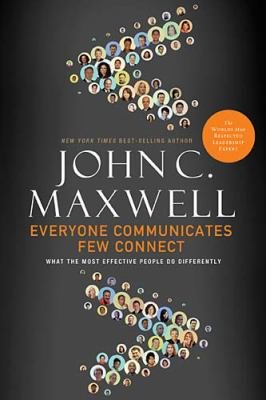
Everyone Communicates Few Connect

This is a great book, chock full of easy to do but brilliant thoughts on effective communication.

If you would like for me to come to your church or office and teach this material please let me know. As a Certified John Maxwell speaker, I will do one free Lunch-N-Learn.

Connecting is the ability to identify with people and relate to them in a way that increases your influence with them.
— John Maxwell

“The number one criteria for advancement and promotion for professionals is an ability to communicate effectively.”- HARVARD BUSINESS REVIEW

President Gerald Ford once remarked, “If I went back to college again, I’d concentrate on two areas: learning to write and to speak before an audience. Nothing in life is more important than the ability to communicate effectively.

Reread those statements, the best way to advance in a corporate career hinges on your ability to communicate effectively. President Ford remarked that he wished he were a better communicator and that nothing was more important than communicating effectively. Speaking of Presidents one of the best connectors and leaders in American history was Thomas Jefferson. Jefferson’s ability to lead others was a direct extension of his ability to make a personal connection. Many leaders in world history demanded respect and demanded that people follow them but Jefferson earned that respect and people followed him because people felt connected to him.

The Art of Power by Jon Meacham

Historian and Biographer Jon Meacham writes of Thomas Jefferson in his book “Thomas Jefferson; The Art of Power, he shares several stories about how Thomas Jefferson was a master of listening and connecting with others so that they would walk away feeling that he was their friend.

“He immersed himself in the subtle skills of engaging others, chiefly by offering people that which they value most: an attentive audience to listen to their own visions and views. Politicians often talk too much and listen too little, which can be self-defeating, for in many instances the surer route to winning a friend is not to convince them that you are right but that you care what they think. A grandson described Jefferson's tactical approach to personal exchanges. "His powers of conversation were great, yet he always turned it to subjects most familiar to those with whom he conversed, whether laborer, mechanic, or other.”-Thomas Jefferson, The Art of Power.

The author shares that even as Jefferson listened to a woman share about how she made a particular meal, he paid close attention and listened with intention and not just out of flattery. Here he was an aristocrat and politician but he stopped to listen to someone normally deemed lower in class than he. How might your communication and inversely your leadership ability expand and grow if you could learn to be like Jefferson:

  1. Listen Intently

  2. Ask Questions

  3. Show genuine interest in the person being talked to.

    “…the surer route to winning a friend is not to convince them that you are right but that you care what they think….”-Thomas Jefferson, The Art of Power.

Bibliography:

  1. Maxwell, J. C. (2010). Everyone communicates few connect: What the Most Effective People Do Differently. HarperCollins Leadership.

  2. Meacham, J. (2012). Thomas Jefferson: The Art of Power. Random House.