Lead like Jesus. Principal 1: Lead Through Stories

On his robe and on his thigh he has a name written, King of kings and Lord of lords.-Revelation 19:16

Jesus taught truth through simple relatable stories.

Picture is from The Chosen series

Jesus Christ was, is, and forevermore is the king of the universe. That title alone gives Him the authority backed up by His divine powers as God, in which He can command what He wills, and we should obey it. In His infinite wisdom, Jesus knew that He needed to come and model the life He wants us to live because we, His people, are like sheep, stubborn, and, unfortunately, often stupid.

Jesus understood that leadership flows from example and not just mere titles.

Jesus took off His divine nature and stepped into time and space onto the earth to lead His people and, ultimately, all people back into a relationship with the Father. What were some of the tools that Jesus used to lead and influence the people around Him? One of those tools was to illustrate His points and truth through short stories.

Stories are Powerful

I’m not sure why, but stories hold power. People gravitate toward good stories. Everyone’s favorite relative is the funny storyteller, right? The entertainment industry spends billions annually producing movies- stories to entertain and teach their morals. The printed word is far from dead, as e-books and physical books are still in high demand. Young and older people love to see, hear, and read stories. Abraham Lincoln was an exceptional storyteller, which was instrumental to his rise in power. People were drawn to his charm, wit, and stories.

People love to learn but they don’t like to be taught.

Everyone loves to learn new things. Universities across the globe are filled with learners. Every prominent speaker now has a masterclass or book on how they succeeded. People spend copious amounts of money on advancing their degrees. People love to learn, but they don’t want to feel like children back in school. They like to learn on their own time and steam. I’m sure this is why Jesus preached only one sermon in his ministry, and the rest was communicated through stories, i.e., examples. His number one phrase was “The Kingdom of Heaven is like…”

Matthew 13:3 “He told many stories in the form of parables, such as this one: “Listen! A farmer went out to plant some seeds…”

Common Ground

Jesus is connecting to his audience through common ground. His audience was familiar with farming, fishing, and shepherding. Jesus connected them with stories they could relate to and easily remember and repeat to others. His parables are an effective means of teaching and remembering the simple truths of the Kingdom of God.

Connecting Through Vulnerability

Jesus didn’t have any sin therefore He told about other people’s failures and sins to help relate to and connect with the crowds. Everyone can relate to how they sinned, messed up, owed money, were betrayed, suffered injustice, and so forth. Vulnerability gives you credibility with your audience, and Jesus reached out to people by sharing such stories that gave Him credibility. This gave Him built-in high ground to command them to “go and sin no more.” The 10 Commandments and the Sermon on the Mound are the precedents of the moral high ground, but through stories, Jesus broke down the barriers and communicated God’s truth to all men, from the powerful to the lowly.

The Wise and Foolish Builders are just such an example. It is a short story, easy to remember and repeat to others, and delivers one of the most powerful truths about the Kingdom in just a few sentences. The truth is that having faith in Jesus is like building your life on a solid rock.

24 “Therefore whoever hears these sayings of Mine, and does them, I will liken him to a wise man who built his house on the rock: 25 and the rain descended, the floods came, and the winds blew and beat on that house; and it did not fall, for it was founded on the rock.

26 “But everyone who hears these sayings of Mine, and does not do them, will be like a foolish man who built his house on the sand: 27 and the rain descended, the floods came, and the winds blew and beat on that house; and it fell. And great was its fall.”-Matthew 7:24-29NKJV

To be an effective leader, share vulnerable and interesting stories that illustrate your point.

5 Aspects to Grow in Leadership

High risk leadership beckons many, but few accept the call.-Gene Kranz

In his book “Failure is Not an Option,” Gene Kranz details his involvement and instrumentation of NASA. He was the flight director who led the teams to get the stranded astronauts of Apollo 13 safely back home. Leadership opportunity is all around us. Will you be ready to answer when the call comes? In the following few articles, I will review the book “The 21 Irrefutable Laws of Leadership” by John Maxwell to help us all know and grow in our leadership. The world needs Christians to rise in leadership; if not, the world will be happy to fill our shoes.

The Law of the Lid

Put quite simply, your organization, business, team, ministry, and family will never grow past the lid of your leadership ability. Everyone can be a leader, but you will only grow to the lid you have placed on your leadership.

Humble yourselves before the Lord, and he will lift you up.-James 4:10

The Law of Influence

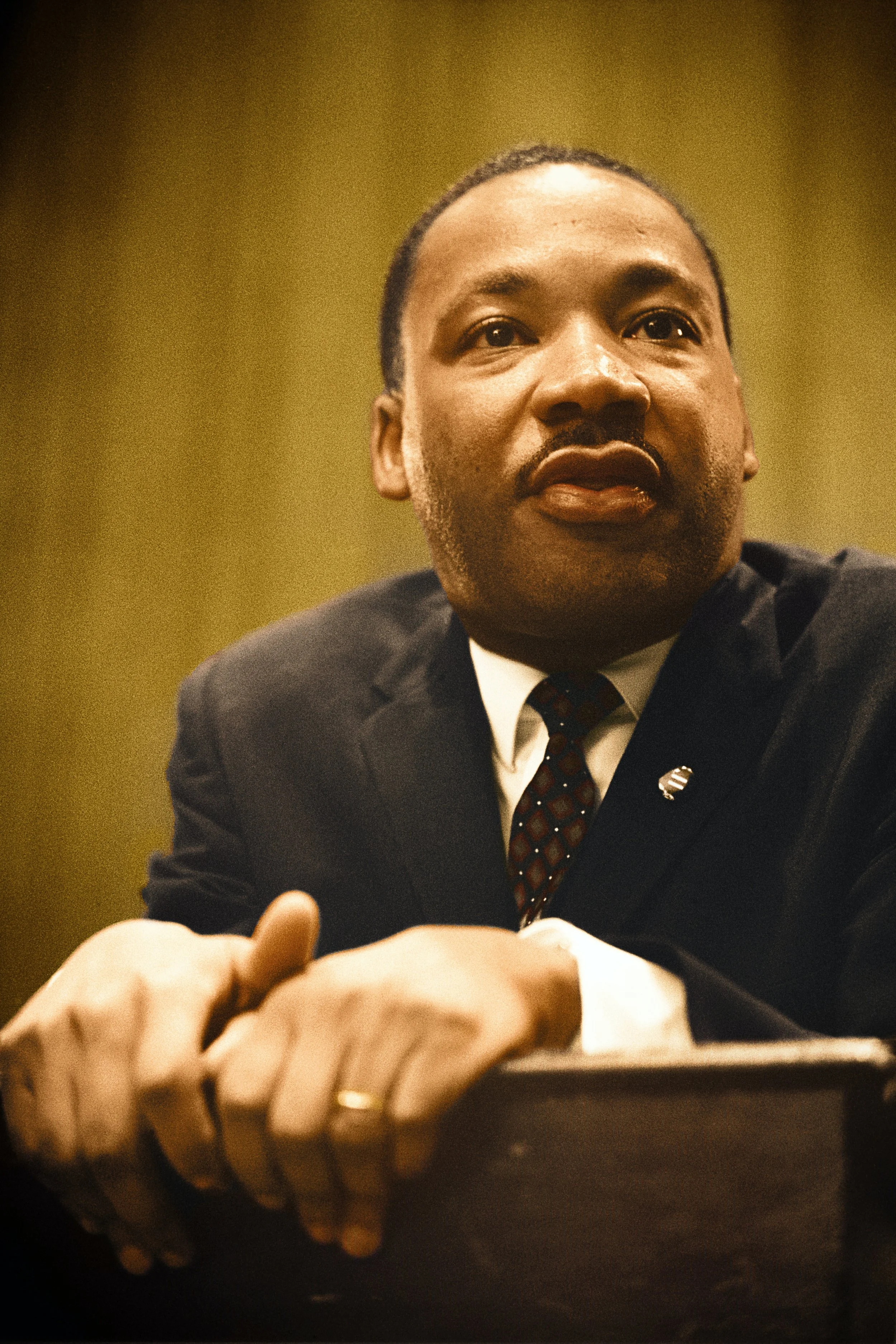
If you aren’t influencing anyone, then you are not a leader. Leadership is defined by people following you and their lives impacted by your leadership. I think of the millions of people who were influenced by the leadership of Dr. Martin Luther King Jr. His words and actions inspired people to make a significant change. Thomas Jefferson and the Founding Fathers inspired and led the nation through the Revolutionary War and forged a new nation.

“If your actions inspire others to dream more, learn more, do more and become more, you are a leader.” —John Quincy Adams

Don’t let anyone look down on you because you are young, but set an example for the believers in speech, in conduct, in love, in faith and in purity.-1 Timothy 4:12

The Law of Process

Leaders learn, develop, and grow over time. No one is born a leader. Many people have leadership skills but may never develop or destructively develop them. Leadership is a process that encourages development, matures people, is a cultural issue, changes people, and is challenging but worth it. The success of any great athletes, Michael Jordan, Tom Brady, and Albert Pujols, didn’t come because they were great in a moment or a big game, but because they put in thousands of hours of practice before their time to shine came.

Let us not become weary in doing good, for at the proper time we will reap a harvest if we do not give up.-Galatians 6:9

The Law of Navigation

A good navigator sees the road ahead and prepares for it. Navigators don’t let emotion cloud their judgment; they draw on experience, know the difference between fact and faith, and are ready to apply it.

Commercial climber Rob Hall died because of a violation of the law of navigation. Rob would successfully lead most of his team to the summit of Mt. Everest within the safe time zone. Upon returning descent, he encounters one of his members, who had been resting due to sickness and blurred vision. This climber persuades Rob against Rob’s better judgment and leads him to the summit. Rob surrenders to this man’s dominating will and leads him up the mountain just before a deadly storm blows in. Due to Rob breaking the law of navigation, he loses his life on the mountain, and the other climber nearly loses his.

Your word is a lamp to guide my feet and a light for my path.-Psalm 119:105 NLT

The Law of Addition

To put it simply, this is the process of serving others. A good leader learns to serve his team. A good leader adds value to his team and builds others up. If you want to be a boss, learn to bark orders well and carry yourself with importance. If you want to be a leader, remember to add value and serve your team, ministry, organization, or family.

But Jesus called them to him and said, “You know that the rulers of the Gentiles lord it over them, and their great ones exercise authority over them. 26 It shall not be so among you. But whoever would be great among you must be your servant, 27 and whoever would be first among you must be your slave, 28 even as the Son of Man came not to be served but to serve, and to give his life as a ransom for many.”-Matthew 20:25-28 ESV

“The greatest leader is not necessarily the one who does the greatest things. He is the one that gets the people to do the greatest things.”
— ― Ronald Reagan

Thought Leadership: Two More Steps to Influence

These last two blog post have been all about thought leadership. As Christians we need to be prepared, positioned and poised to be thought leaders in our generation. If we are not influencers the world will fill the void as we have seen time and time again. Jesus was a thought leader and influencer; He upset the established order and created a revolution in just three years. This blog post continues the steps that we started last week to help us become thought leaders and influencers in our time.

You were taught, with regard to your former way of life, to put off your old self, which is being corrupted by its deceitful desires; 23 to be made new in the attitude of your minds;-Ephesians 4:22-23

Begin to Organize and frame your Thoughts

Organizing is what you do before you do something, so that when you do it, it is not all mixed up.”—A. A. Milne

Good organization is a  mixture of strategy, roles, relationships, and coordination which is essential to collective performance. This is true of all organizations. Organization is the bringing together of the previous thought ideas into coherent action plans and strategy. Strategy comes from a Greek word that originally referred to the art of military leaders. Strategy has been defined in many ways. Five lessons in strategy.

  • Plan: a conscious and intentional course of action.

  • Perspective: an organization's way of framing where it wants to go and how it intends to get there.

  • Pattern: a consistent form of decisions.

  • Position: the way an organization positions itself in relationship to its environment.

  • Ploy: a plan or decision whose purpose is to provoke a reaction from competitors.”

When organizing thought, and deciding on strategy here are some questions to ask:

  • What is our mission?

  • What actions are required?

  • Who should do what?

  • Who is in charge?

  • How should we make decisions?

  • How do we coordinate efforts?

  • What do individual members care about most: time, quality, participation?

  • What are the special skills and talents of each group member?

  • How does this group relate to others?

  • How will we determine success?

  • How will we deal with failure?

Like an animal's skeleton or a building's framework, structure both enhances and constrains what an organization can do. Structure provides the architecture for pursuing goals. It is a blueprint for expectations and exchanges among internal players (executives, managers, employees) and external constituencies (such as customers, competitors, regulators, and clients).

Creating Successful Teamwork

9 Two are better than one, because they have a good return for their labor: 10 If either of them falls down, one can help the other up. But pity anyone who falls and has no one to help them up. 11 Also, if two lie down together, they will keep warm. But how can one keep warm alone? 12 Though one may be overpowered, two can defend themselves. A cord of three strands is not quickly broken.-Ephesians 4:9-10

The New England Patriots in American Football have won the Super Bowl 6 out of 8 years that they went. They have implemented these team building ideas. They are known for having very few “Super stars” or big name talents on their team. Their leader Tom Brady is not known for superior displays of athleticism he is known for his short but timely passes and management of the time and talent around him.

1. Respect the Culture. This culture has been crafted through the questions and work from the previous statements. Your team you are building but be able to fit the culture, be able to be coached to fit the culture or not join the culture.

  • Know your foundational core

  • Define a clear culture and ensure that everyone knows what is expected from them and the role they play to strengthen the culture.

  • Identify behavioral patterns and anticipate long-term impact that may disrupt the culture, and make decisions accordingly

  • Winning is about sustained excellence, not trying to force mediocrity to be great

2. Know your teammates capabilities. Leaders perceive themselves differently than how their employees perceive them.  These misaligned perceptions cause tension and turmoil and lead to untrustworthy relationships and a lack of productivity.

  • Know your people intimately, beyond job titles. Know them as individuals.

  • Talent should be constantly evaluated as marketplace demands change and competitors evolve

Tom Brady Ready to Go

Conclusion:

If you say your a leader but no one is following then your just strolling through the park. A leader must be a influencer of people. To do that you must be an influencer of thought.

I shared with you today 5 processes to be a thought leader.

  1. Create and define your “What If” future.

  2. Identify helpful or hurtful trends.

  3. Frame or reframe thought

  4. Begin to Organize and Frame your Thoughts

  5. Create Successful Teamwork

Citations:

  1. Bolman, L., & Deal, T. (n.d.). Reframing Organizations

  2. Clinton, R., ( ) The Making of a Leader

  3. Brosseau, D., & Kawasaki, G. (2014). Ready to Be a Thought Leader?: How to Increase Your Influence, Impact, and Success (1st ed.). Jossey-Bass.

  4. Ministries, L. (2022, June 29). Leadership Lessons from Thomas Jefferson. Leadership Ministries. https://leadmin.org/articles/leadership-lessons-from-thomas-jefferson

  1. P. (2021, May 11). Churchill: Leader and Statesman. International Churchill Society. https://winstonchurchill.org/the-life-of-churchill/life/churchill-leader-and-statesman/

3 Steps to Thought Leadership

Thought Leadership

Leaders attract followers in order to pursue shared interests. If you claim to be a leader but no one is following; you are just taking a stroll through the park. One of the goals of leadership is to attract followers.

The key to that is to influence thought.

Today I want to share with you some thoughts on how to influence thought and in doing so attract followers and ultimately influence others. If you can’t influence others are you really a leader?

Leadership is a lifelong process. There is no one set time of arrival. No good leader would say, “I arrived at optimal leadership at such and such day”. It is a continuous stream of adjustments, learning and framing thoughts and surroundings. Leadership is a lifetime of lessons. It is not a set of do-it-yourself correspondence courses that can be worked through in a few months or years. - Robert Clinton: The Making of a Leader. Let’s unpack some ideas on what it is to influence others.

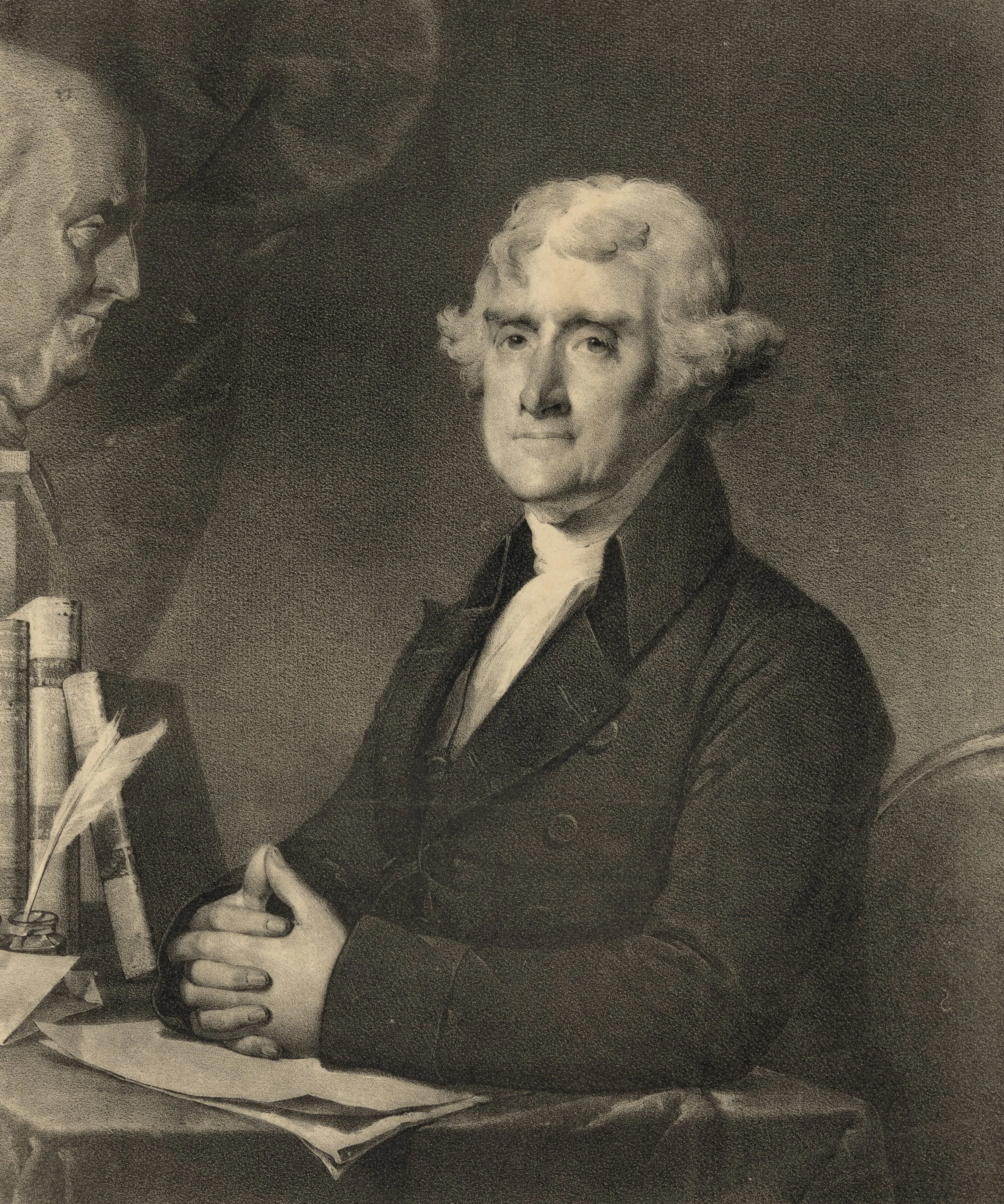
Thomas Jefferson. Influencer.

  “Jefferson had a remarkable capacity to marshal ideas and to move men, to balance the inspirational and the pragmatic,” writes biographer Jon Meacham.

Jefferson preferring to befriend and reason with others instead of fighting and arguing with them. Jefferson transformed what would have been a mere political documents into a proclamation of America’s ideals. 

Thomas Jefferson

Winston Churchill. Influencer.

Historians say Churchill was an effective leader because of his ability to inspire people; his unique strategic insight; his passion; and his strong personality. He had the capability of inspiring people, even in the middle of one of the darkest times of human history. 

Thought Leadership Process

  1. Create and Define your “What If” future.

As a future leader and influencer of people in family, business, economics or other; you need to start by creating the outlines or frames of your “What if” future. The goal of this is to become the go-to person in your particular niche. You may not have all the credentials or knowledge yet to be a thought leader but through this process you'll attain credentials and expertise by the actions you take to bring about that future. Your “What if” future should be exciting and energizing and inspires both you and other potential followers.

  • “What future am I committed to making happen in this arena?

  • What future do I stand for? What will I work to change or remove?

  • What must I work to prevent from happening? What must no longer be allowed to happen?

  • What “way it's always been done” is no longer the way it should be done?

  • What do people not know yet that they must be informed about?

  • What amazing transformation has already occurred that I know about and that needs to be shared more broadly?

  • What legacy do I want to leave?”

2. Identify Trends

Trends are the larger conversations, the big ideas, the popular things happening being talked about right now. How might current trends benefit or hinder you? If you know the current trends, you can inspire others to think in new ways, and beyond these boundaries.

  • What economic trends may help or hinder me?

  • What local, regional, national, and global political trends might impact me?

  • What are the technological trends? What technology advancements will be needed to bring about my ‘What If Future’?

  • What client, customer, vendor, market, and industry trends will impact my ‘What If Future’?

What trends can you buck? Meaning what trends can you ignore, or not pay attention to? Bucking the tend may help people question the status quo and view things in a new light. To make a difference you need to find new ways of approaching the problems or opportunities ahead. You'll have to push out of your normal boundaries and explore many different paths; inspire in yourself and others divergent paths of thinking.

Reframe your thought

3. Frame or Reframe Thought

A frame is a mental model—a set of ideas and assumptions—that you carry in your head to help you understand and negotiate a particular “territory.” A frame is a way of thinking about a situation.-Reframing Organizations, Lee G. Bolman & Terrence E. Deal

Frames define the questions we ask and solutions we consider.

In The Art of War, Sun Tzu: “Many options bring victory, few options bring defeat, no options at all spell disaster”.

Think like this to start reframing your situation to get a new perspective.

“What is the sum of 5 plus 5?” The only right answer is “10.”

“What two numbers add up to ten?” Many more options right?

“If I had a problem to solve and my whole life depended on the solution, I would spend the first fifty‐five minutes determining the question to ask, for once I know the proper question, I could solve the problem in five minutes”-Albert Einstein

Asking the right question helps to break frames.

There is nothing so confining as the prisons of our own perceptions”-William Shakespeare